Our shared history is complex and often difficult to untangle. It can be tempting to reduce it to simple stories of heroes and villains, but doing so overlooks the nuance and the fuller truths that shaped our past. Understanding it well requires thoughtful examination, honest reflection, and a willingness to engage with the unvarnished truths - both inspiring and uncomfortable - that have brought us to where we are today.
Last Tuesday marked the return of our Civil Rights Learning Journeys series. Previous journeys – from the Eastern Shore to Alexandria, Richmond to Rockville – have focused on revealing truths held close by the places where they lay. These more granular pictures are essential for telling stories often unknown, but the tapestry of America’s racial past is just that: a complicated fabric of threads extending in all directions, intertwined and intersecting, working in tandem to tell a story composed of a million moving pieces. It’s not an easy one to tell, but there’s arguably no better place to hear it than the Smithsonian National Museum of African American History and Culture (NMAAHC).
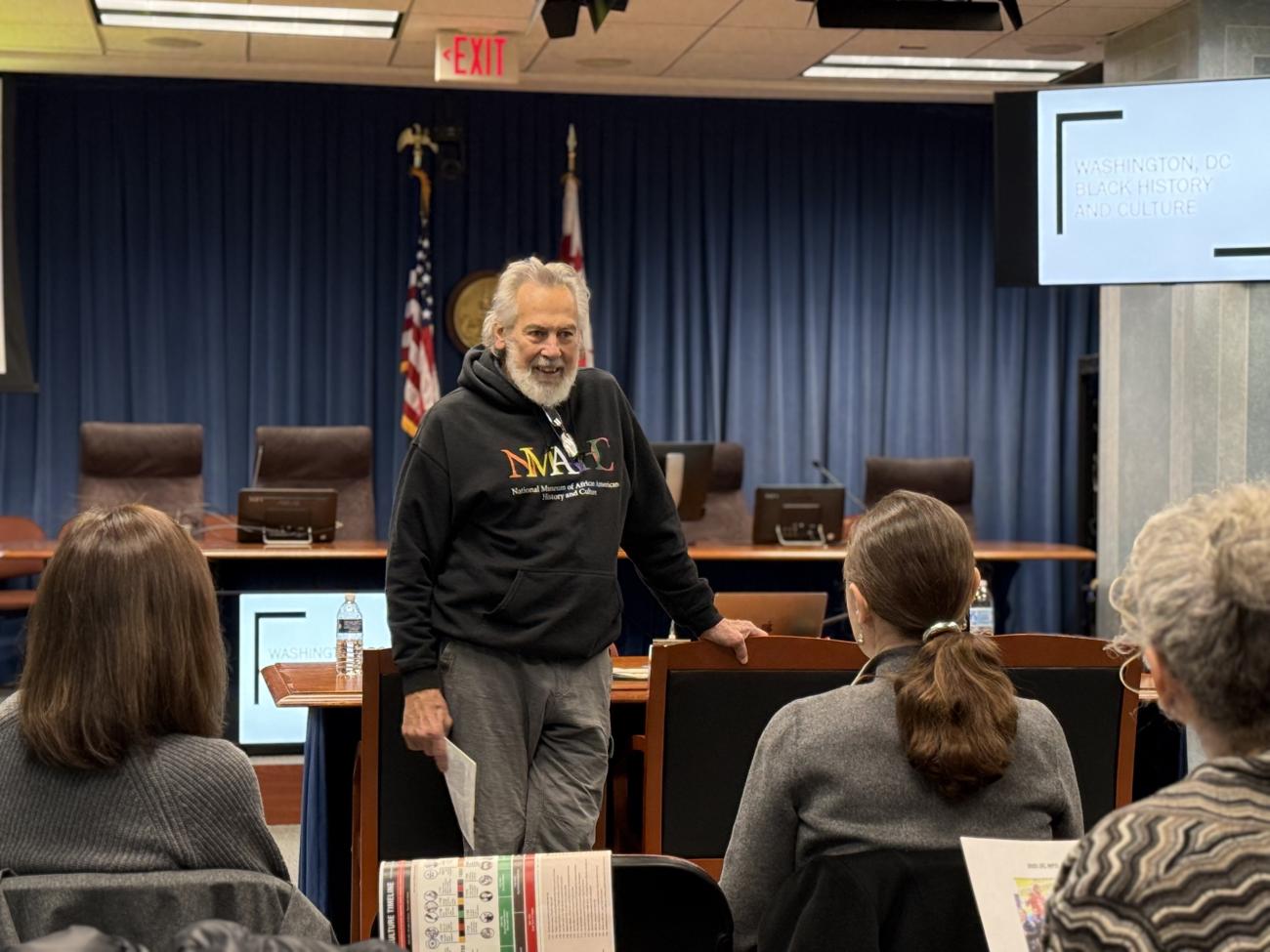
Beginning early in the morning at DC’s John A. Wilson building – named after a pivotal figure in our region’s political and racial history – we were led by Drs. Bernard Demczuk and Sharita Jacobs, through a tour of DC’s past, its place in the history of civil rights movements, and the impact Black residents had on the culture of the city. It was a critical framing of the expansive task before us.
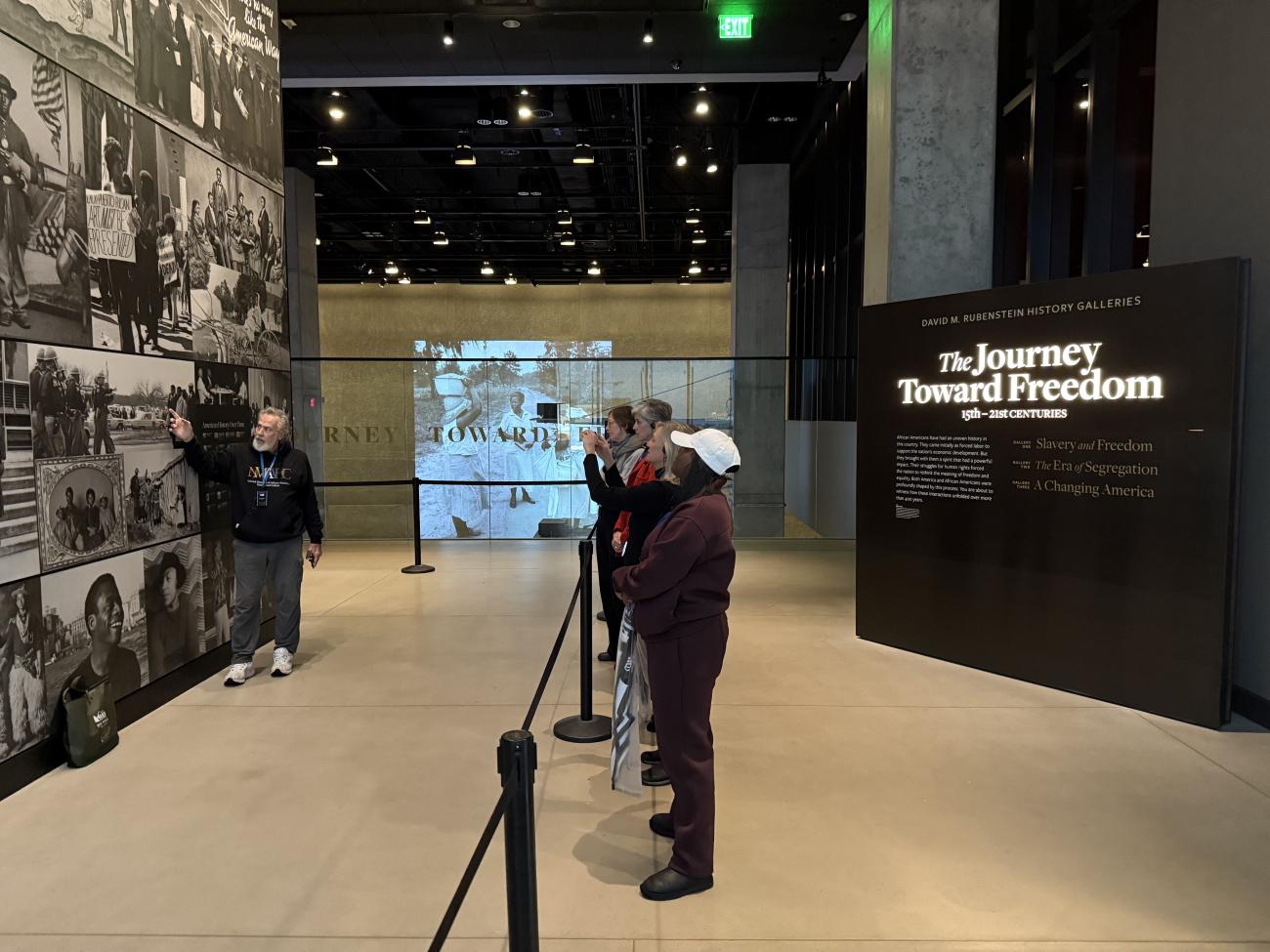
The NMAAHC was founded to face a daunting prospect: telling the story of millions of people over hundreds of years. And not just any story. It’s one filled with unspeakable violence and unimaginable struggle, difficult to digest in any context but potentially overwhelming when laid bare before you. It’s also thought to be filled with triumph, the uplifting power of community and shared history.
Put simply, it’s an undertaking far too vast to absorb in a single visit. Even with an early start, we quickly realized it would take days to see and fully appreciate everything available. But through our facilitators – Dr. Demczuk an expert on culture, Dr. Jacobs on history – we were able to frame the visit in a way that reflected the museum’s mission: to “connect stories, scholarship, art, and artifacts from the past and present to illuminate the contributions, struggles, and triumphs that have shaped our nation.”
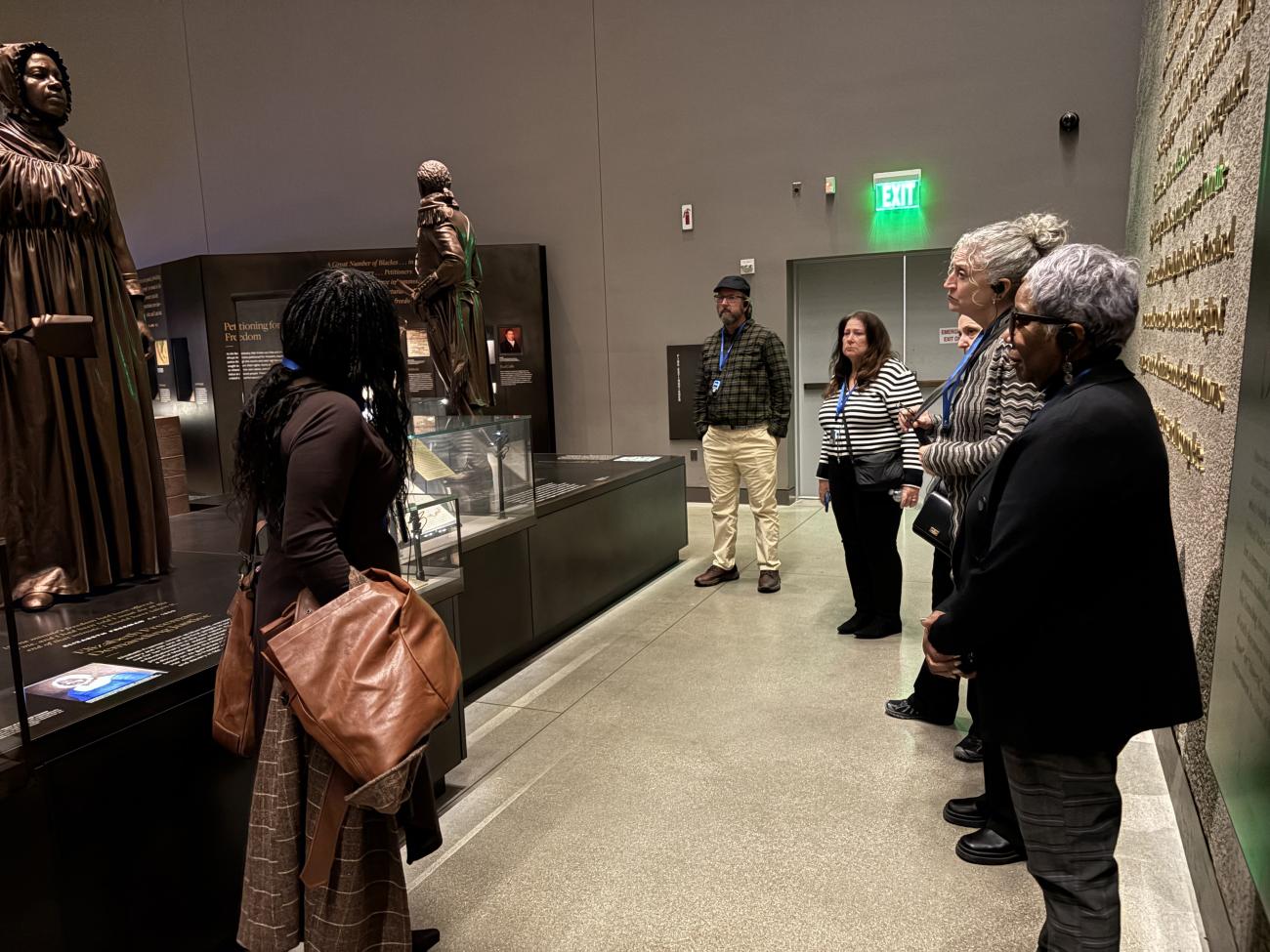
What we learned was often difficult to hear, stories of slave ships and cruel retributions that no one should have to endure. But we learned of other things too – communities built under the harshest conditions, an indomitable will to survive, and unrivaled contributions to this country’s cultural fabric. As Dr. Demcuk led us through five centuries of history, he insisted on ending each stop with a positive, something good that improbably arose from abject horror. It was hard to understand at first – what could possibly be uplifting any of this? – but as we moved through the museum it all made sense.
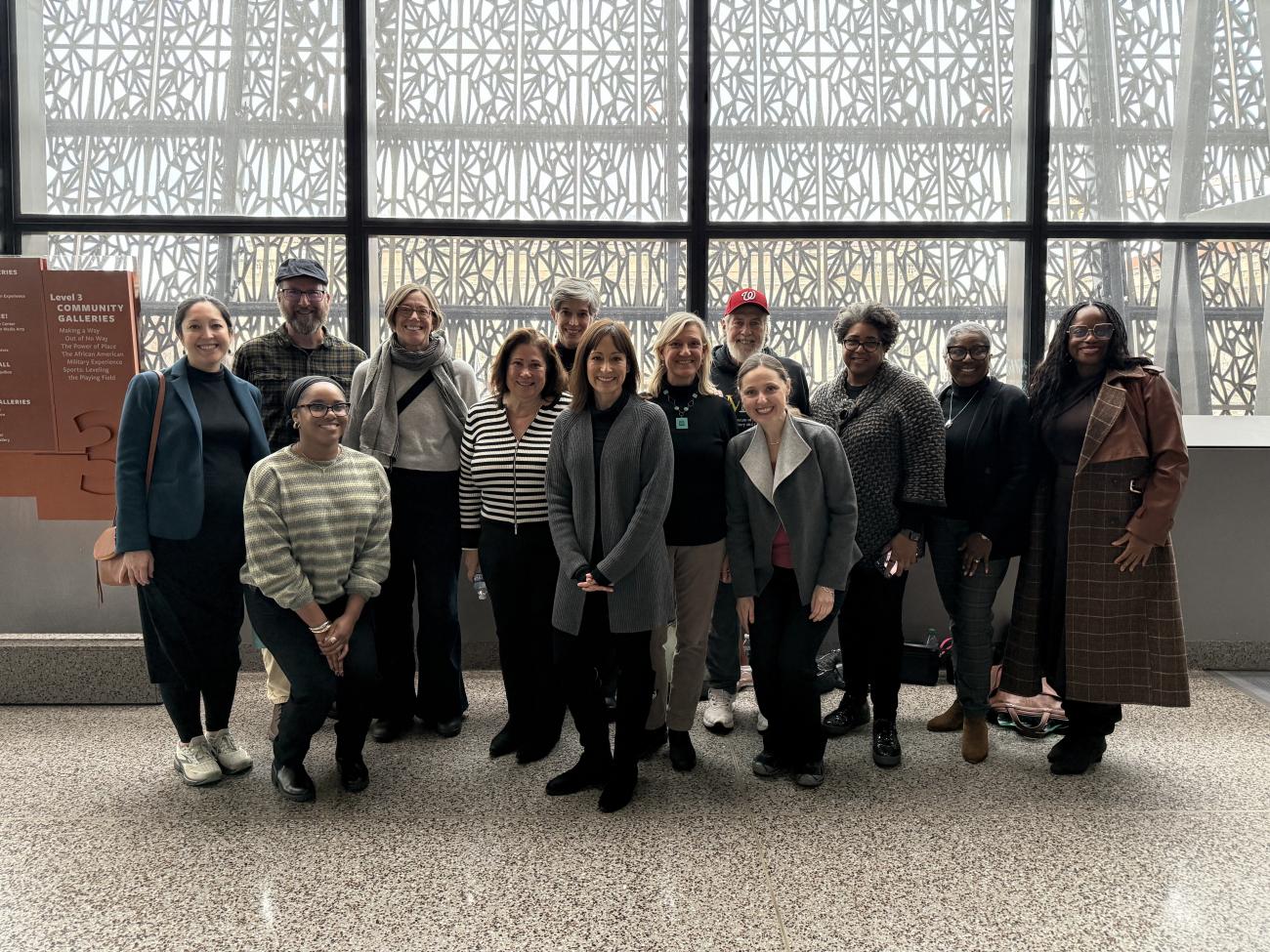
To view this history with only outrage does not adequately honor what Black people in this country have endured; it’s a story of struggle, yes, but it’s also one of success. We must grasp it all to move forward with the knowledge it imparts properly; the full tapestry must be woven. Only then will we have the unvarnished truth.

Thank you to the sponsors of this leg of the Civil Rights Learning Journey - it was your generosity and support that made it all happen!